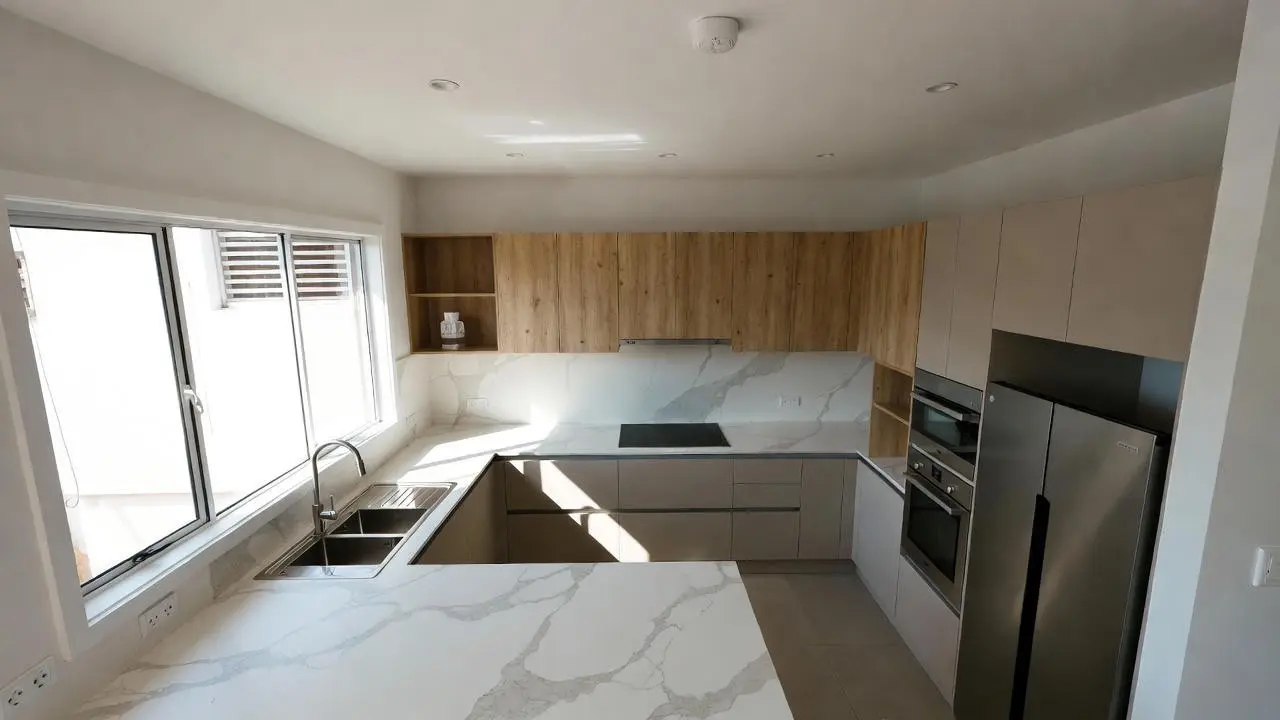
Kitchen renovations in Melbourne often begin with excitement and end with quiet frustration. Homeowners invest between $15,000 and $45,000, expecting a space that feels easier to use every day. Yet many discover the opposite. Cooking feels awkward, movement feels cramped, and small annoyances build into daily regret. The reason usually has nothing to do with finishes or appliances. It starts much earlier, with layout decisions made before construction even begins.
From narrow Fitzroy terraces to bayside weatherboard homes and inner city apartments, Melbourne kitchens face unique challenges. Understanding how to optimise the kitchen work triangle, or when to move beyond it, can prevent most of these problems.
Fast Facts
- Core issue: Most kitchen regrets start with poor layout planning, not finishes or appliances.
- Work triangle: Helpful as a guide, but often needs adapting for modern Melbourne homes.
- Biggest risk: Ignoring clearances leads to blocked walkways and daily frustration.
- Modern solution: Zoning prep, cooking, and cleaning areas improves flow for families.
- Cost impact: Layout mistakes often cause the biggest renovation budget blowouts.
What the Kitchen Work Triangle Really Means
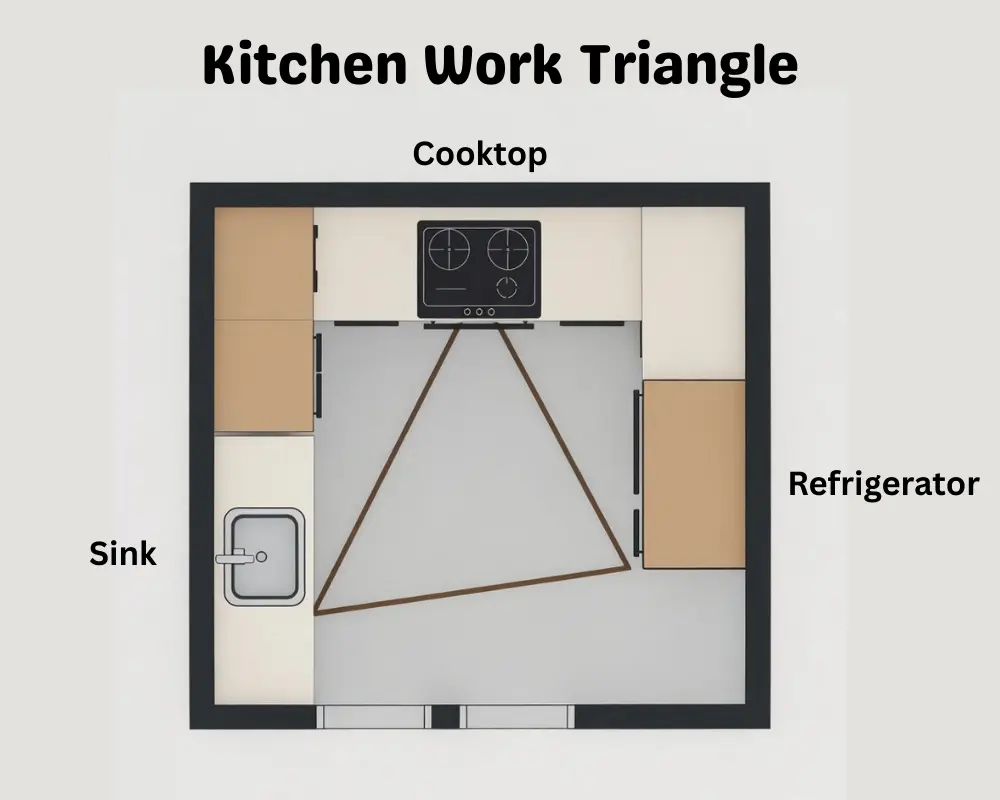
The kitchen work triangle connects the sink, cooktop, and fridge. It was designed to reduce unnecessary movement while cooking. In simple terms, it helps you move smoothly from storing food, to preparing it, to cooking and cleaning.
Many homeowners think the triangle is a strict rule. It is not. It is a planning principle. The goal is efficiency, not geometry. When used correctly, it reduces back and forth walking and avoids collisions between people and appliances.
Problems begin when people copy layouts without considering how they actually live or how Melbourne homes are built.
Why Many Melbourne Kitchens Get the Triangle Wrong
A common mistake is prioritising appearance over movement. Large islands, oversized fridges, and overseas design trends often look impressive but clash with local floor plans.
Melbourne homes frequently include narrow blocks, heritage overlays, and fixed walls. In these spaces, forcing a perfect triangle often creates new problems. Fridge doors hit benches. Walkways shrink below safe clearances. Prep space disappears.
Homeowners then ask a familiar question. How did a brand new kitchen end up harder to use than the old one?
Melbourne Homes Are Not Built for Perfect Triangles
Classic work triangles suit wide, square kitchens. Many Melbourne homes do not fit that description.
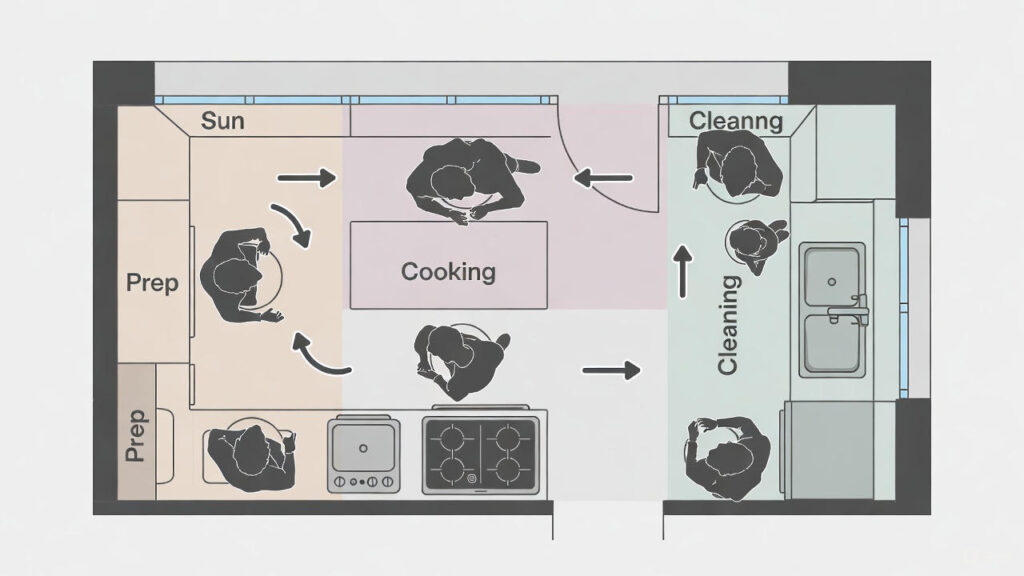
In terrace houses in suburbs like Fitzroy or Collingwood, kitchen widths of four to five metres limit movement. Heritage overlays may restrict wall removal or window changes. In these homes, zoning often works better than a strict triangle. A prep zone near the sink, a cooking zone near the cooktop, and a separate cleaning zone reduce congestion.
Weatherboard homes in bayside suburbs often benefit from galley layouts. Parallel benches with the fridge placed at one end can form a modified triangle. Vertical storage and pull-out pantries help reclaim space without widening the room.
Inner city apartments in the CBD or South Yarra face even tighter constraints. Relocating plumbing may require strata approval and add thousands in costs. In these kitchens, a compact U-shaped layout without an island often delivers better flow.
Understanding these realities early saves money and stress later.
Clearance Rules People Often Ignore
Clearances are one of the biggest sources of regret in kitchen renovations. They seem minor on paper but feel major in daily use.
Walkways under 900 millimetres create bottlenecks. Dishwasher doors block access. Oven doors clash with benches. Fridge doors swing into traffic paths.
Australian guidelines usually recommend 1000 to 1200 millimetres for main walkways. Testing this before building helps. Many professionals suggest marking layouts on the floor with tape and walking through daily routines.
Once cabinetry is installed, fixing these mistakes becomes expensive or impossible.
How Bad Layout Decisions Blow Out Budgets
Layout mistakes often hide behind budget overruns. Homeowners blame rising material costs or delays, but poor planning sits at the root.
Moving plumbing or electrical points after installation can add $5,000 to $10,000. Replacing cabinetry due to door clashes adds more. Delays occur when builders discover issues mid project that were never addressed during planning.
These costs hurt more because they feel avoidable. Most of them are.
Modern Kitchens Need More Than One Triangle
Many Melbourne households include multiple cooks, children, and open plan living. A single triangle rarely serves everyone well.
Parents report children blocking fridge access during cooking. Couples bump into each other while preparing meals. Entertaining becomes stressful when guests crowd the same space.
Modern kitchens often perform better with zones. A prep zone with clear bench space. A cooking zone with safe clearance. A cleaning zone that stays accessible even during meals. This approach keeps traffic flowing and reduces conflict.
The triangle still guides placement, but zoning adapts it to real life.
Myths That Cause Kitchen Regret
Several myths continue to mislead homeowners.
One is that bigger islands always improve flow. In narrow Melbourne homes, oversized islands often block it. Another is that open plan kitchens suit all families. Many parents find they need separation during busy cooking times.
There is also confusion between overseas advice and Australian standards. US guidelines do not always align with local requirements. Following the wrong advice can lead to non compliant clearances or ventilation issues.
Finally, many believe layout changes are easy later. In reality, they are among the most expensive fixes.
Planning That Prevents Regret
Successful renovations start with understanding how the kitchen will be used, not how it will look online.
This means mapping daily routines. How many people cook at once. When kids enter the space. How groceries move from fridge to bench. Where mess tends to build up.
Companies like Skilled Tradies Melbourne focus on this planning stage. By working in occupied homes and managing multi phase renovations, they account for movement, safety, and disruption before building begins.
This approach turns the kitchen from a design statement into a functional workspace.
A Practical Checklist Before You Lock in Your Layout
Before approving your final design, ask a few simple questions.
Can two people move without colliding.
Do appliance doors open without blocking walkways.
Is prep space located where you actually prepare food.
Does the layout support daily cooking, not just entertaining.
Are clearances compliant with Australian standards.
If any answer feels uncertain, pause and review. It is cheaper now than later.
Avoiding Regret Starts Before the Build
Most Melbourne kitchen regrets are preventable. They begin with copying trends, skipping site specific planning, or misunderstanding how the work triangle applies to local homes.
Smart layout planning respects Melbourne’s housing styles, local regulations, and real family routines. When done well, it saves money, reduces stress, and creates a kitchen that feels natural to use.
A beautiful kitchen matters. A functional one matters more. When both come together, renovation regret disappears and daily life becomes easier.
Frequently Asked Questions
Does the kitchen work triangle still matter in modern Melbourne homes?
Yes, the kitchen work triangle still matters as a planning guide, but it should not be treated as a rigid rule. In many Melbourne homes, especially terraces and open plan layouts, zoning prep, cooking, and cleaning areas often works better than forcing a perfect triangle.
What is the ideal clearance for walkways in a Melbourne kitchen renovation?
Most Australian guidelines recommend main kitchen walkways between 1000 and 1200 millimetres. Clearances below this often lead to blocked access, appliance clashes, and long term frustration once the kitchen is in daily use.
Why do kitchen renovations often go over budget in Melbourne?
Kitchen renovations commonly exceed budgets due to layout mistakes discovered after construction starts. Relocating plumbing, changing cabinetry, or fixing clearance issues mid project can add thousands, which is why detailed layout planning before building begins is critical.