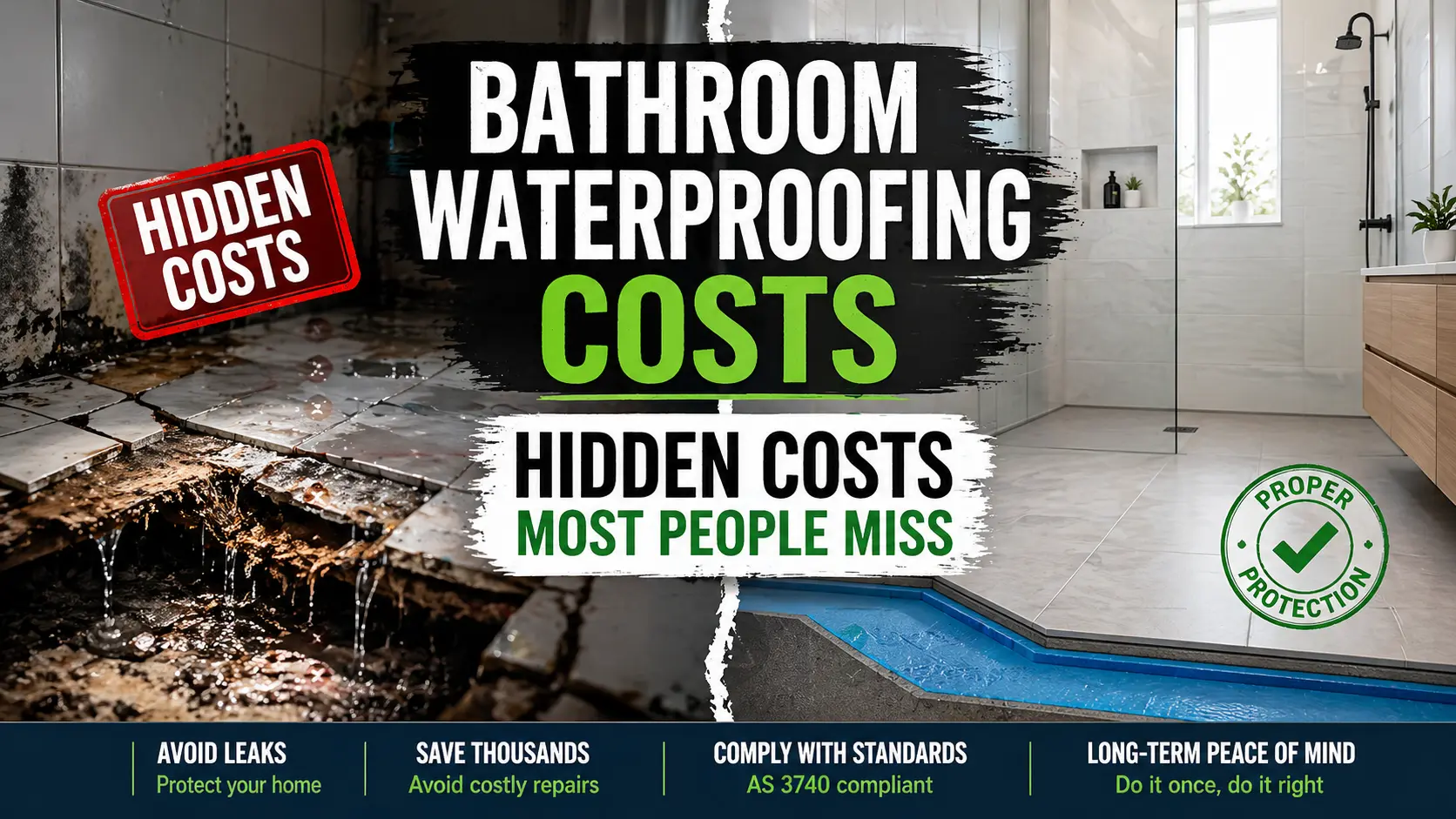
A Melbourne homeowner planned a simple bathroom renovation and received a waterproofing quote for $750. It seemed reasonable and aligned with online estimates. But once the tiles came off, the reality changed fast.
The contractor discovered rotting timber, uneven flooring, and mould hidden beneath the surface. None of these issues appeared in the original quote. The homeowner had no choice but to approve additional work. By the end, the waterproofing cost alone crossed $4,000.
This is not a rare case. Many homeowners searching for the cost of waterproofing a bathroom in Melbourne face similar surprises. The initial quote often reflects ideal conditions, not real-world scenarios.
Fast Facts
- Low quotes can rise fast: Hidden prep, repairs, and compliance needs can increase waterproofing costs.
- Subfloor damage is costly: Rot, mould, or cracks may only appear after demolition starts.
- Proper waterproofing takes time: Multiple coats and drying time help reduce leak risks.
- Compliance matters: Work should meet Australian standards and include clear documentation.
- Cheap work can cost more later: Failed waterproofing may lead to leaks, mould, and major repairs.
What Bathroom Waterproofing Really Costs in Melbourne
Most online guides suggest waterproofing costs between $500 and $750 for a standard bathroom. Some even advertise rates as low as $40 per square metre. These numbers create expectations that rarely match reality.
In practice, proper waterproofing in Melbourne usually costs between $2,000 and $6,000 or more, depending on the condition of the bathroom and the level of work required.
This gap exists because basic quotes often exclude key steps such as surface preparation, structural repairs, and compliance requirements. Many tradies present a starting price to stay competitive, then adjust the cost once work begins and hidden issues appear.
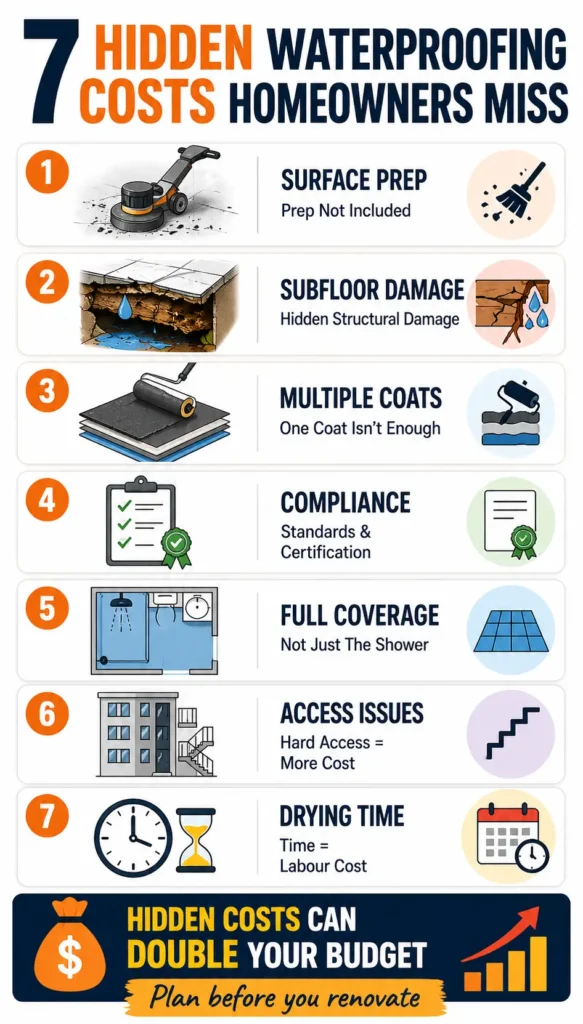
7 Hidden Costs of Bathroom Waterproofing Most Tradies Don’t Mention
1. Surface Preparation
Surface preparation is one of the most overlooked parts of waterproofing, yet it plays a critical role in the final outcome. Before applying any membrane, the surface must be clean, dry, level, and structurally sound.
This process may involve grinding old adhesive, removing debris, repairing uneven areas, and ensuring proper drainage falls. Without proper preparation, the waterproof membrane cannot bond effectively, which increases the risk of failure.
Many low quotes skip this step entirely or treat it as an optional extra. In reality, surface preparation can add hundreds or even thousands of dollars depending on the condition of the bathroom.
2. Subfloor Damage
Subfloor damage is often the biggest reason waterproofing costs increase. Older Melbourne homes commonly use timber subfloors, which are highly vulnerable to water damage over time.
When moisture penetrates through tiles or grout, it can cause rot, swelling, and mould beneath the surface. These issues remain hidden until demolition begins, which is why they rarely appear in initial quotes.
Repairing subfloor damage can involve replacing joists, installing new sheeting, and re-levelling the base. Costs can range from $2,000 to $10,000 or more depending on the extent of the damage. This single factor can completely change the renovation budget.
3. Multiple Coats and Materials
Proper waterproofing is not a one-step process. It requires a system that includes primer, reinforcement at joints and corners, and multiple coats of waterproof membrane.
Australian standards recommend at least two coats to ensure durability and coverage. Some cheaper contractors apply only one coat or use lower-quality materials to reduce costs.
While this may lower the initial quote, it increases the likelihood of leaks in the future. Investing in the correct materials and application process is essential for long-term performance.
4. Compliance and Certification
Bathroom waterproofing in Australia must comply with standards such as AS 3740. These regulations define how waterproofing should be applied, including coverage areas, thickness, and curing time.
Compliance also involves documentation and, in many cases, certification. This proves that the work meets legal requirements and protects the homeowner during resale or insurance claims.
Non-compliant work may pass unnoticed initially but can cause serious issues later. If a leak occurs and the work does not meet standards, insurance providers may reject claims. Fixing non-compliant waterproofing can cost far more than doing it correctly the first time.
5. Full vs Partial Waterproofing
Many homeowners assume waterproofing only applies to the shower area. While this may be true in some cases, many Melbourne homes require full bathroom floor waterproofing.
This is especially important in properties with timber subfloors or upper-level bathrooms, where water can easily spread to surrounding areas.
Some tradies quote for partial waterproofing to keep the price low. However, once work begins, they may recommend upgrading to full coverage. This change increases both material and labour costs, often without prior warning.
6. Access and Labour Complexity
Not all bathrooms are easy to access. Apartments, multi-storey homes, and tight layouts can make waterproofing more challenging.
Limited space, shared walls, and restricted entry points increase labour time and effort. Workers may need additional equipment or take extra precautions to complete the job safely.
These factors are rarely included in initial quotes. Instead, they appear as added costs during the project, contributing to the overall budget increase.
7. Delays and Drying Time
Waterproofing requires time to complete properly. Each coat of membrane must dry fully before the next layer can be applied. In Melbourne’s cool and damp climate, drying times can extend even further.
This process often takes several days, not a few hours as some homeowners expect. Delays in waterproofing can push back tiling and other stages of the renovation.
Extended timelines can increase labour costs and create inconvenience, especially if the bathroom is unusable during the renovation.
Why Tradies Don’t Tell You These Costs Upfront
Many tradies operate in a highly competitive market. To win jobs, they often present lower initial quotes that focus on basic work under ideal conditions.
These quotes do not always include potential risks or hidden issues. Instead, additional costs are introduced later as variations once the actual condition of the bathroom becomes clear.
While not all contractors follow this approach, it remains a common industry practice. Homeowners who understand this pattern can better prepare for the real cost of waterproofing.
Cheap Waterproofing vs Proper Waterproofing: What’s the Real Risk?
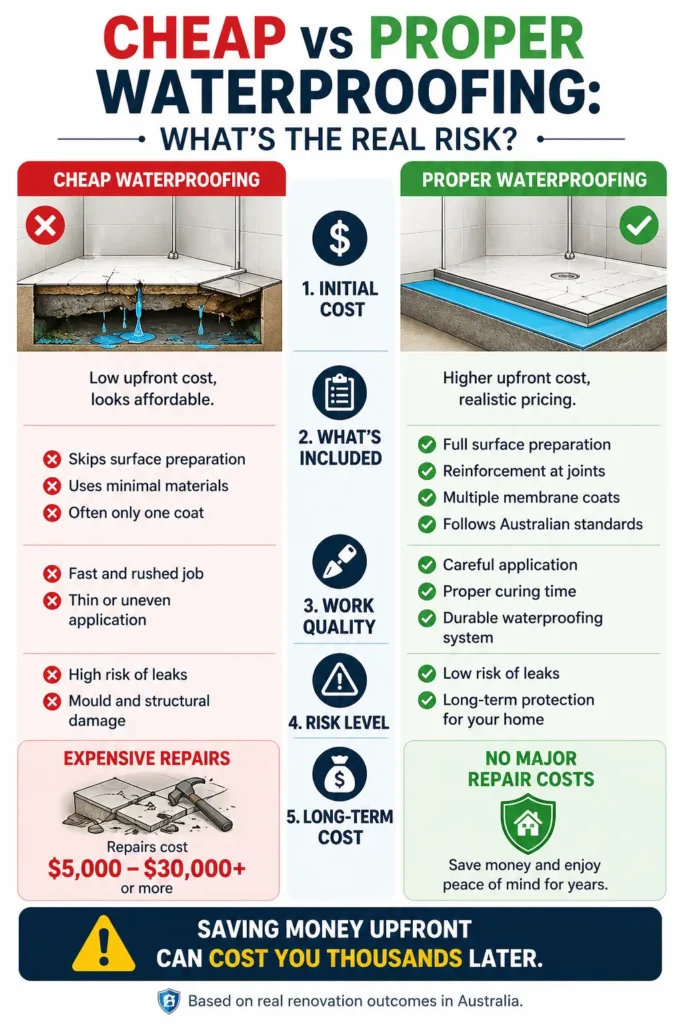
Choosing the cheapest option may seem like a way to save money, but it often leads to higher costs in the long run. Poor waterproofing is one of the most common causes of building defects in Australia.
Low-cost jobs often skip essential steps such as preparation, reinforcement, and proper curing. As a result, the waterproofing system fails prematurely.
Repairing failed waterproofing requires removing tiles, fixing underlying damage, and reapplying the entire system. This can cost between $5,000 and $30,000 or more, far exceeding the original savings.
Why New Bathrooms Still Leak After Renovation
Many homeowners believe tiles and grout create a waterproof barrier. In reality, they only act as a surface finish.
The actual waterproofing layer sits beneath the tiles. If this layer is poorly applied or damaged, water will find its way through.
Leaks often appear months or even years after renovation. By that time, moisture may have already caused significant damage to walls, floors, and surrounding structures.
Related Insight
Before planning waterproofing or renovation work, read this guide on bathroom renovation laws in Victoria to understand key rules Melbourne homeowners should know.
How to Avoid Hidden Waterproofing Costs in Melbourne
Homeowners can reduce risk by taking a proactive approach. Start by requesting detailed written quotes that clearly outline the full scope of work.
Ask what is included and what is excluded. Confirm that the waterproofing will comply with Australian standards and request certification where required.
Choose experienced, licensed professionals with a strong track record. Avoid selecting contractors based solely on price.
Finally, set aside a contingency budget of at least 20 percent to cover unexpected issues. This ensures you are prepared for any surprises during the renovation.
The Real Cost Isn’t Waterproofing. It’s Getting It Wrong
Waterproofing may seem like a small part of a bathroom renovation, but it has a major impact on the overall result.
A low initial quote can quickly become expensive if hidden costs and poor workmanship come into play. Investing in proper waterproofing protects your home, your budget, and your peace of mind.
The smartest approach is not to look for the cheapest option, but to understand the full scope of work and choose quality from the start.
Frequently Asked Questions
How much does bathroom waterproofing cost in Melbourne?
Bathroom waterproofing in Melbourne can start from a few hundred dollars, but full renovation jobs often cost more once surface preparation, subfloor repairs, multiple coats, and compliance work are included.
Why do waterproofing costs increase after demolition starts?
Costs often increase because hidden issues become visible only after tiles and old flooring are removed. Common problems include rotting timber, mould, cracked surfaces, poor drainage falls, and damaged subfloors.
Is cheap bathroom waterproofing worth the risk?
Cheap waterproofing can become expensive if the work skips preparation, reinforcement, curing time, or compliance steps. Poor waterproofing may lead to leaks, mould, tile removal, and major repair costs later.