
The Ultimate Guide to Eco-Friendly Benchtops and Cabinets for Melbourne Kitchen Renovations
A kitchen renovation in Melbourne looks simple at first, but the choices become confusing fast. The engineered stone ban changed the market, costs feel unpredictable, and eco-friendly materials come with mixed claims. This guide gives clear answers so you can choose safe, sustainable options with confidence.
Fast Facts
- Melbourne’s engineered stone ban steers homeowners toward safer, silica-free materials like recycled glass and porcelain.
- Eco-friendly options such as FSC timber, bamboo, and low-VOC composites improve indoor air quality and reduce chemical exposure.
- Material costs vary widely, with eco benchtops ranging from budget-friendly laminates to premium recycled timber or porcelain.
- GECA and FSC certifications help confirm that materials meet real sustainability standards and avoid greenwashing.
- Sustainable kitchens can boost resale value due to strong buyer demand for healthy, low-maintenance, and energy-efficient homes.
Why Melbourne Homeowners Are Moving Toward Eco-Friendly Materials
Many Melbourne homeowners turned toward eco materials after the engineered stone ban. The ban removed products with more than 1 percent crystalline silica because of the high risk of silicosis. That shift pushed households to safer options like recycled glass, bamboo, porcelain, and stainless steel.
Safety is a strong driver, but health also matters. Low-VOC coatings and FSC-certified timber improve indoor air quality and reduce long-term exposure to harmful chemicals. Families want kitchens that look good, last long, and support healthier living.
The Real Problems People Face When Choosing Kitchen Materials
Cost is the biggest worry. Quotes for eco kitchens often swing between fifteen thousand and fifty thousand dollars. Online ads show lower prices, but real invoices are higher because eco-certified materials cost more and require skilled installers.
Durability confusion is another problem. Many suppliers use vague green claims that lack real testing. Some Melbourne homeowners also fear maintenance issues, especially with recycled timber or bamboo, which need sealing and regular care.
People also struggle to compare suppliers. Disputes with fabricators, incorrect measurements, and slow timelines continue to create stress. These problems appear often in Consumer Affairs Victoria complaints during kitchen renovations.
Eco-Friendly Benchtop Options That Melbourne Homeowners Trust

Recycled Glass
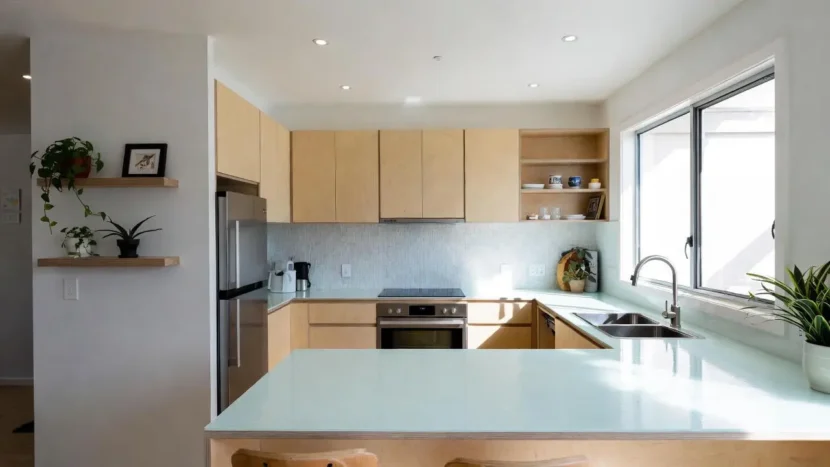
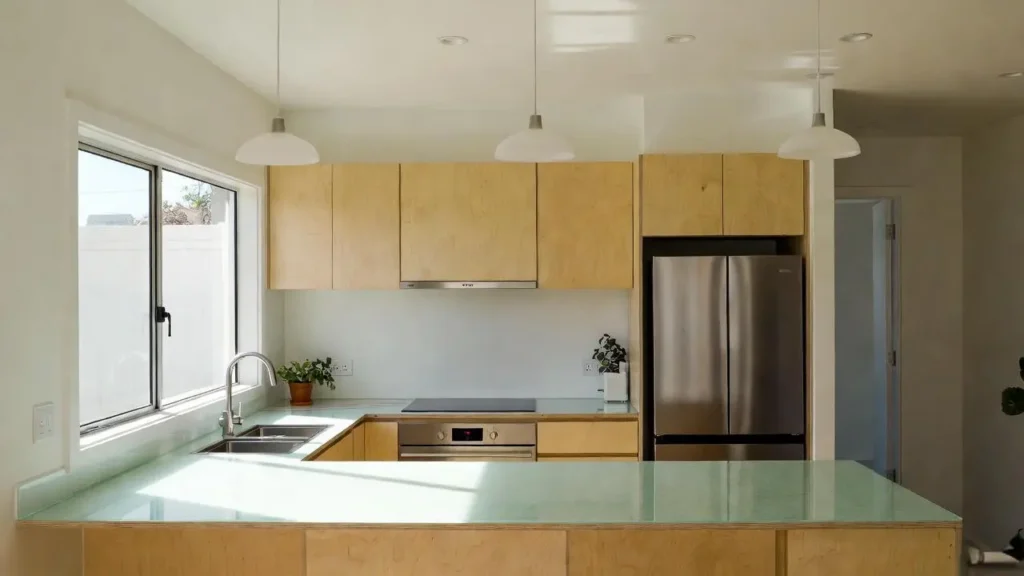
Recycled glass contains up to 85 percent post-consumer waste and has no respirable silica. It resists stains and heat and does not need sealing. It suits busy kitchens and supports a strong circular economy.
Recycled Timber
Recycled timber offers warm character and sustainability. It needs sealing to prevent moisture damage in Melbourne’s humid conditions. It works best when homeowners can commit to occasional maintenance.
Porcelain
Porcelain is tough and handles knives, spills, and heat well. It is fully silica-free during installation, which makes it a safe option. Chips can occur if heavy items hit the edges.
Stainless Steel
Stainless steel is hygienic, recyclable, and long-lasting. It handles spills and heat with ease. Scratches develop over time, but many homeowners like the worn, industrial look.
Bamboo and Composites
Bamboo grows fast, looks clean, and withstands daily use when sealed. Some low-VOC composites also perform well, but cheaper boards can warp or fade with high humidity.
Eco-Friendly Cabinet Materials Worth Considering
Bamboo Cabinets
Bamboo works well for cabinets because it is strong, stable, and widely available in Melbourne. It suits modern and coastal designs and stays durable when coated with a low-VOC finish.
FSC-Certified Plywood
FSC plywood provides structure and clean lines. It releases fewer chemicals than cheaper melamine boards. It also gives better strength for hinges and storage hardware.
Recycled Timber Cabinets
Recycled timber creates a unique look and reduces landfill waste. It needs sealing but remains durable for decades. It also blends with matte, minimalist Melbourne trends.
Paperock and Eco Composites
Some composite boards are water-resistant and low-VOC. They work well in high-use homes and give a smooth finish. Buyers must check for GECA labels or Green Star verification because many composites claim sustainability without proof.
What These Materials Really Cost in Melbourne
Eco benchtops and cabinets fall into clear price groups. Recycled timber benchtops range from two thousand to four thousand dollars for the material and often another two thousand dollars for installation. Porcelain costs about three thousand to five thousand installed. Bamboo ranges from fifteen hundred to three thousand. Stainless steel sits between twenty-five hundred and forty-five hundred. Low-VOC laminate ranges from one thousand to twenty-five hundred, while terrazzo or eco composites reach thirty-five hundred to six thousand.
Cabinet costs depend on size and finish. FSC plywood ranges from four thousand to eight thousand. Bamboo sits between three thousand and six thousand. Recycled timber ranges from five thousand to ten thousand. E0 melamine sits between two thousand and five thousand.
Electrical, plumbing, tiling, and demolition add another four to ten thousand dollars. Many Melbourne homeowners face cost blowouts because older homes hide structural damage, asbestos, or outdated wiring.
Also Read
If you want a stylish kitchen without overspending, check out these clever Melbourne kitchen hacks that look luxe for less .
The Safety and Compliance Checklist Every Melbourne Homeowner Must Know
Engineered stone is banned in Victoria and across Australia. Any benchtop with more than 1 percent crystalline silica cannot be installed, supplied, or processed. WorkSafe inspectors enforce these rules and issue fines for non-compliance.
Inside the home, low-VOC and E0 materials improve safety. E0 means the lowest level of formaldehyde emissions and helps improve indoor air quality. FSC certification confirms timber was sourced responsibly. GECA labels help buyers avoid misleading claims because GECA tests lifecycle impact and human health factors.
Electrical and plumbing work must follow Victorian regulations. Licensed trades must issue compliance certificates for work over seven hundred and fifty dollars.
How These Eco Choices Affect Resale Value
Sustainable kitchens can lift the value of a Melbourne home by five to ten percent. Buyers show strong interest in safe, low-VOC materials and low-maintenance surfaces. Real estate agents report that energy-efficient and low-emission kitchens make a property more desirable.
Eco materials also match Melbourne trends. Soft neutrals, warm timbers, and porcelain surfaces appeal to buyers who prefer clean and natural finishes. Thoughtful storage also increases appeal because many Melbourne homes have compact kitchens.
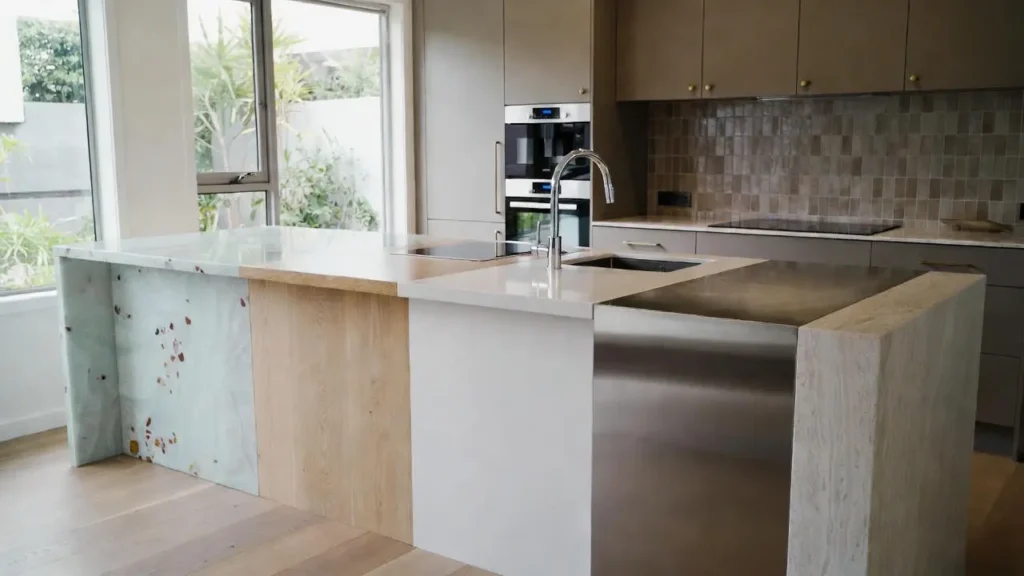
A Melbourne Kitchen Story That Shows the Real Process
A family in Brunswick planned a renovation in 2024 before the engineered stone ban took effect. Their installer warned them that their chosen benchtop would soon be illegal. They stopped the project and looked for safer options.
They switched to recycled glass because it met the new rules and offered strong durability. They paired it with bamboo cabinets finished with a low-VOC sealant. The project took four weeks, and the cost increased because they needed electrical upgrades, but the final result was healthier and easier to maintain.
How to Choose the Right Eco Material for Your Kitchen
Start with your budget, then match it with your lifestyle. Choose recycled glass or porcelain if you want low-maintenance durability. Choose bamboo or FSC plywood if you want warm timber with fewer emissions. Select stainless steel if hygiene is your main priority.
Compare certifications, confirm the VOC rating, and ask for material data sheets. This prevents greenwashing and long-term regret. Make sure your installer has experience with silica-free products to avoid costly errors.
Common Mistakes to Avoid When Renovating an Eco-Friendly Kitchen
Many homeowners choose materials before checking compliance. Some assume eco boards need less care, but timber still needs sealing. Others skip ventilation during installation and face off-gassing odours. Delays also happen when suppliers run out of stock or when electricians and plumbers are booked out.
A clear plan prevents most of these problems. The right eco materials can make your kitchen safer, healthier, and stronger for the long term.
Related Insight
For a deeper look at sustainable surfaces, explore our guide on reclaimed wood benchtops in Melbourne kitchens .
FAQs
FAQ 1: What is the safest benchtop material to use in Melbourne after the engineered stone ban?
The safest choices in Melbourne are silica-free options like recycled glass, porcelain, stainless steel, and some bamboo composites. These materials avoid the health risks linked to crystalline silica and meet the new Victorian regulations. They also offer strong durability and low maintenance, which makes them practical for family kitchens.
FAQ 2: Are eco-friendly kitchen cabinets more expensive than standard cabinets in Melbourne?
Eco-friendly cabinets can cost more upfront because materials like FSC plywood, bamboo, and recycled timber often require higher-quality manufacturing. The long-term cost is usually lower because these materials last longer, release fewer chemicals, and reduce future repair or replacement needs. Many Melbourne buyers now prefer sustainable materials, which can also support resale value.
FAQ 3: How do I know if a benchtop or cabinet material is genuinely eco-friendly and not greenwashed?
Check for certifications like GECA, Green Star, or FSC, and review the material’s VOC rating. Look for clear information about recycled content, lifecycle performance, and formaldehyde levels. Avoid products with vague claims such as “eco,” “green,” or “natural” that do not include data or independent verification.