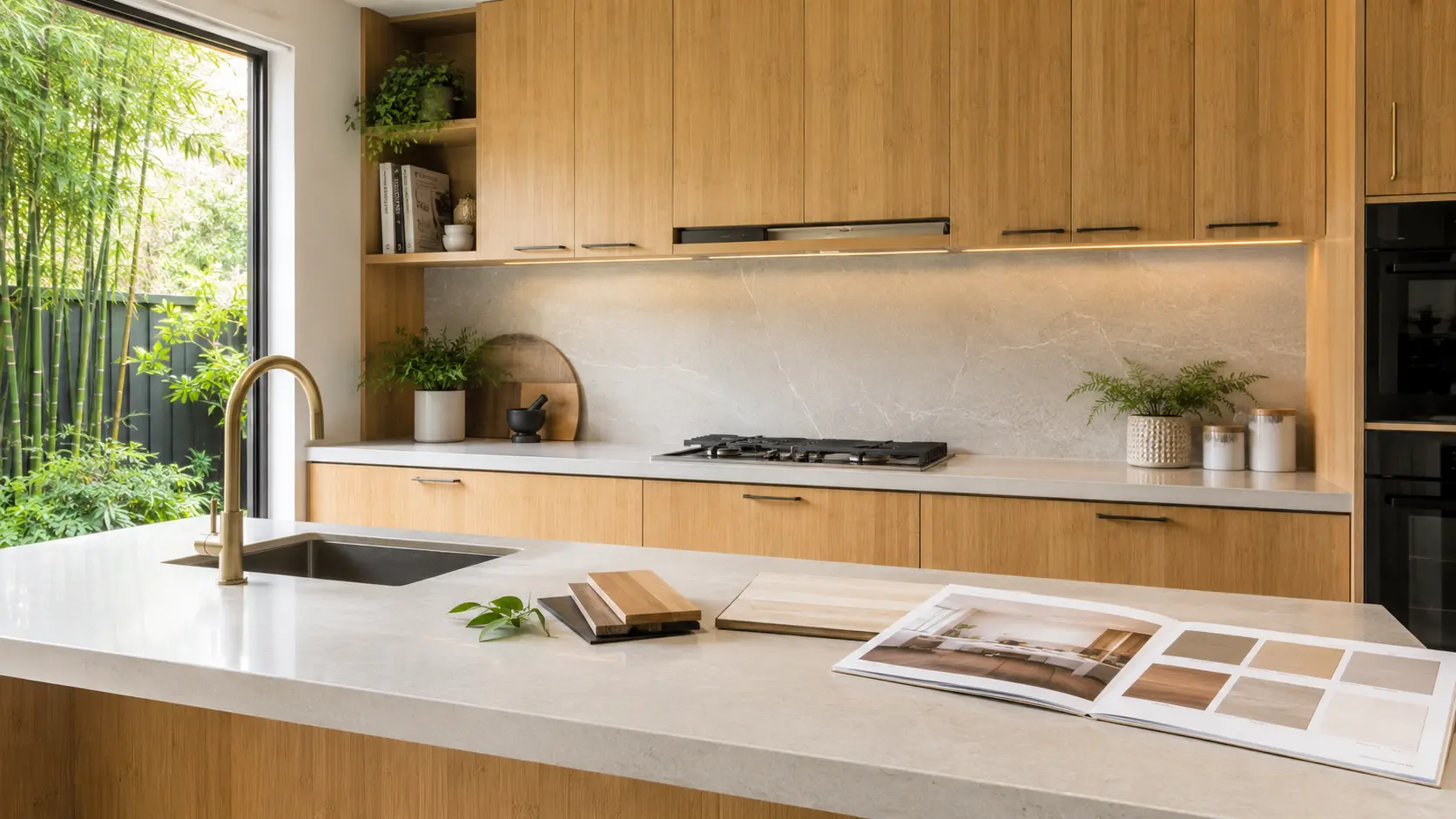
Imagine spending months planning your dream kitchen renovation, investing more than $40,000, and then discovering a few years later that your cabinets have swollen near the sink, lost their finish, or no longer suit your lifestyle. For many Melbourne homeowners, choosing the right cabinet material is just as important as selecting the perfect layout or benchtop.
Today, kitchen renovations are about more than creating a beautiful space. Homeowners want materials that last, support a healthier indoor environment, and reduce their impact on the planet. That is why bamboo cabinetry has become an increasingly popular choice. While bamboo is well known for its sustainability, its real value comes from combining durability, timeless style, and long-term performance.
Fast Facts
- Bamboo cabinetry is a sustainable option because bamboo grows quickly and can be harvested more often than traditional hardwoods.
- Quality matters because bamboo cabinets perform best when they are properly manufactured, sealed and installed.
- Bamboo is more moisture-resistant than standard MDF, but it is not completely waterproof.
- Low-VOC finishes and responsible sourcing can make bamboo cabinetry a healthier and more eco-conscious choice.
- For Melbourne kitchen renovations, bamboo suits homeowners who want natural style, durability and long-term value.
Why More Melbourne Homeowners Are Looking Beyond Traditional Kitchen Cabinets
Kitchen cabinets are one of the biggest investments in any renovation. They often account for a significant share of the overall renovation budget, so homeowners want materials that will continue looking good for many years.
At the same time, Melbourne homeowners are becoming more environmentally conscious. Many are choosing natural finishes, energy-efficient appliances, and sustainable building materials to create healthier homes. Your research shows that buyers are also concerned about hidden renovation costs, moisture damage, indoor air quality, and choosing a cabinet material that will not become outdated after only a few years.
Design trends also reflect this shift. Scandinavian, Japandi, and contemporary Australian kitchens continue to favour warm timber tones, clean lines, and natural textures. Bamboo complements these styles while offering a modern alternative to traditional hardwood cabinetry.
What Makes Bamboo Cabinets a Sustainable Choice?
Bamboo stands apart from many traditional cabinet materials because it is one of the world’s fastest-growing renewable resources. Unlike hardwood trees that can take decades to mature, many bamboo species reach harvest maturity within three to five years. After harvesting, the plant continues growing from the same root system without needing to be replanted.
However, sustainability is about more than how quickly a plant grows.
High-quality bamboo cabinetry should also come from responsibly managed sources and use low-emission manufacturing processes. Products with FSC certification, low-VOC finishes, and low-formaldehyde adhesives provide stronger environmental and indoor air quality benefits than uncertified alternatives.
This distinction is important because not every bamboo cabinet is equally sustainable. The quality of manufacturing, transportation, finishes, and adhesives all influence the overall environmental impact. Choosing certified products helps ensure your renovation supports both your family and the environment.
How Bamboo Compares with MDF, Timber and Laminate Cabinets
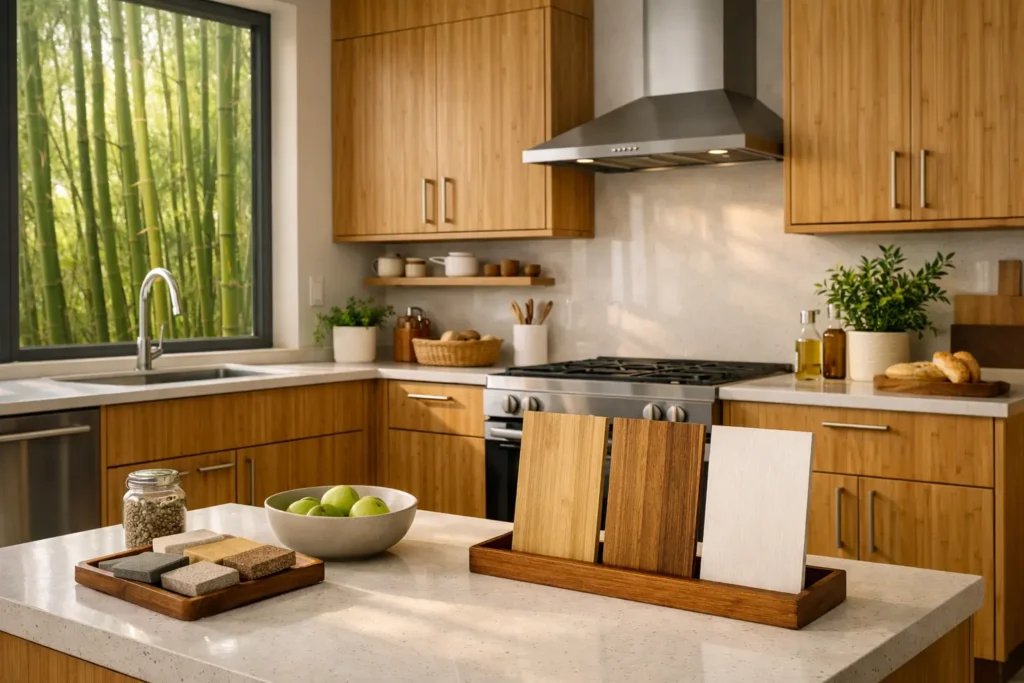
Many homeowners compare bamboo with MDF, solid timber, or laminate before making a final decision. Each material has strengths, but bamboo offers a balance that appeals to homeowners seeking long-term value.
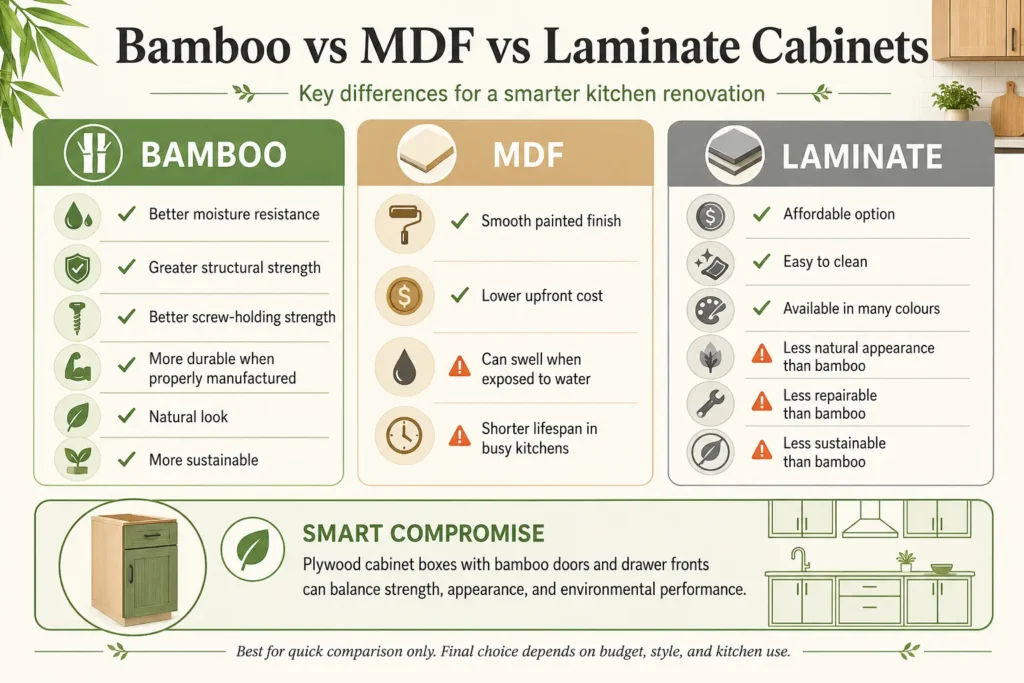
Solid timber delivers a premium appearance and excellent longevity, but it usually comes with a higher price and may expand or contract more as humidity changes. Bamboo offers similar durability while being harvested much more quickly, making it a more renewable option. Strand-woven bamboo products can even achieve hardness levels comparable to, or higher than, several traditional hardwoods.
Compared with MDF, bamboo provides better moisture resistance and greater structural strength. MDF remains popular because it creates a smooth painted finish and costs less upfront. However, standard MDF can swell when exposed to water and generally has a shorter lifespan in busy kitchens. Bamboo also offers better screw-holding strength and improved durability when properly manufactured.
Laminate cabinets remain an affordable option for many renovations. They are easy to clean and available in many colours, but they cannot match the natural appearance, repairability, or sustainability of bamboo. A practical compromise for some homeowners is using plywood cabinet boxes with bamboo doors and drawer fronts, combining strength, appearance, and environmental performance.
Will Bamboo Cabinets Last in a Busy Melbourne Kitchen?
Durability is one of the first questions homeowners ask before investing in bamboo cabinetry. The good news is that high-quality engineered bamboo performs exceptionally well in busy family kitchens when it is manufactured and installed correctly.
Unlike standard MDF, which can swell when exposed to water, bamboo has better natural moisture resistance. It is not completely waterproof, but quality finishes and proper sealing help protect it from everyday splashes around sinks, dishwashers, and food preparation areas. This makes bamboo well suited to Melbourne’s changing climate, where seasonal humidity can affect some traditional materials.
Strength is another major advantage. Strand-woven bamboo is one of the hardest engineered natural materials available for cabinetry. It resists dents and scratches better than many homeowners expect, making it a practical choice for families with children or pets. When combined with durable hardware and quality installation, bamboo cabinets can remain functional and attractive for more than 20 years.
Maintenance is also straightforward. Regular cleaning with a soft damp cloth and mild detergent is usually all that is needed. Avoid harsh chemical cleaners and abrasive pads, as these can damage the protective finish. Keeping the kitchen well ventilated and wiping away standing water quickly will also help extend the life of the cabinetry.
Is Bamboo Worth the Investment for Your Kitchen Renovation?
Every kitchen renovation involves balancing budget, appearance, and long-term value. While bamboo cabinetry usually costs more than basic MDF options, it should be viewed as a long-term investment rather than simply a higher upfront expense.
Cabinetry often represents around 30 to 45 percent of a kitchen renovation budget, so selecting a durable material can reduce the likelihood of repairs or replacement later. Your research also highlights that bamboo’s combination of durability, low maintenance, and sustainable appeal makes it attractive for homeowners planning to stay in their homes for many years.
Another benefit is its timeless appearance. Natural materials rarely go out of style, and bamboo fits beautifully with many of Melbourne’s most popular kitchen designs, including Scandinavian, Japandi, contemporary Australian, and minimalist interiors. Instead of chasing short-lived trends, homeowners can create a kitchen that feels warm, modern, and relevant for years to come.
That said, bamboo is not the right choice for every project. If your renovation has a very limited budget, quality laminate or low-formaldehyde MDF may offer a more practical solution. The key is choosing the material that best matches your budget, lifestyle, and renovation goals.
How to Choose High-Quality Bamboo Cabinetry in Melbourne
Not all bamboo cabinetry is manufactured to the same standard. Taking the time to evaluate products carefully will help you enjoy the full benefits of this sustainable material.
Start by asking whether the bamboo has recognised certifications such as FSC or PEFC. These certifications indicate that the material has been responsibly sourced. Next, look for cabinetry made with low-VOC finishes and low-formaldehyde adhesives to support better indoor air quality for your family.
You should also ask your renovator about the construction method. Quality strand-woven or engineered bamboo panels provide better strength and stability than lower-grade products. Smooth finishes, tight laminations, and strong warranties are all signs of well-manufactured cabinetry.
Finally, choose an experienced kitchen renovation company that understands Melbourne homes and local conditions. Professional installation plays an important role in preventing moisture issues, ensuring accurate cabinet alignment, and achieving a finish that will stand the test of time.
Also Read
For another cabinet style that brings a premium finish to modern kitchens, explore why matte cabinetry is becoming a luxe choice for Melbourne homeowners .
Conclusion
Choosing kitchen cabinets is about far more than selecting a colour or finish. It is a decision that affects how your kitchen performs, how healthy your home feels, and how well your renovation holds its value over the years.
For many Melbourne homeowners, bamboo cabinetry offers an excellent combination of sustainability, durability, and modern design. Its rapid renewability, impressive strength, natural warmth, and compatibility with today’s popular kitchen styles make it a compelling alternative to traditional cabinet materials. When you combine responsibly sourced bamboo with low-VOC finishes, quality craftsmanship, and professional installation, you create a kitchen that is designed to perform for decades, not just look good on the day it is finished.
If you are planning a kitchen renovation and want expert advice on selecting cabinetry that suits your home, lifestyle, and budget, the experienced team at Skilled Tradies Melbourne can help. From material selection through to professional installation, they can create a kitchen that is both beautiful and built to last.
Frequently Asked Questions
Are bamboo cabinets a good choice for Melbourne kitchen renovations?
Yes, bamboo cabinets can be a strong choice for Melbourne kitchens when they are properly manufactured, sealed and installed. They suit homeowners who want natural warmth, durability and a more sustainable cabinet material.
Are bamboo cabinets better than MDF?
Bamboo usually offers better structural strength, screw-holding strength and moisture resistance than standard MDF. MDF can still be useful for painted finishes and lower budgets, but bamboo is often better for long-term durability and natural style.
What should homeowners check before choosing bamboo cabinetry?
Homeowners should ask about responsible sourcing, low-VOC finishes, low-formaldehyde adhesives, moisture protection, warranty details and installation quality. These details help ensure the bamboo cabinetry supports both sustainability and long-term kitchen performance.