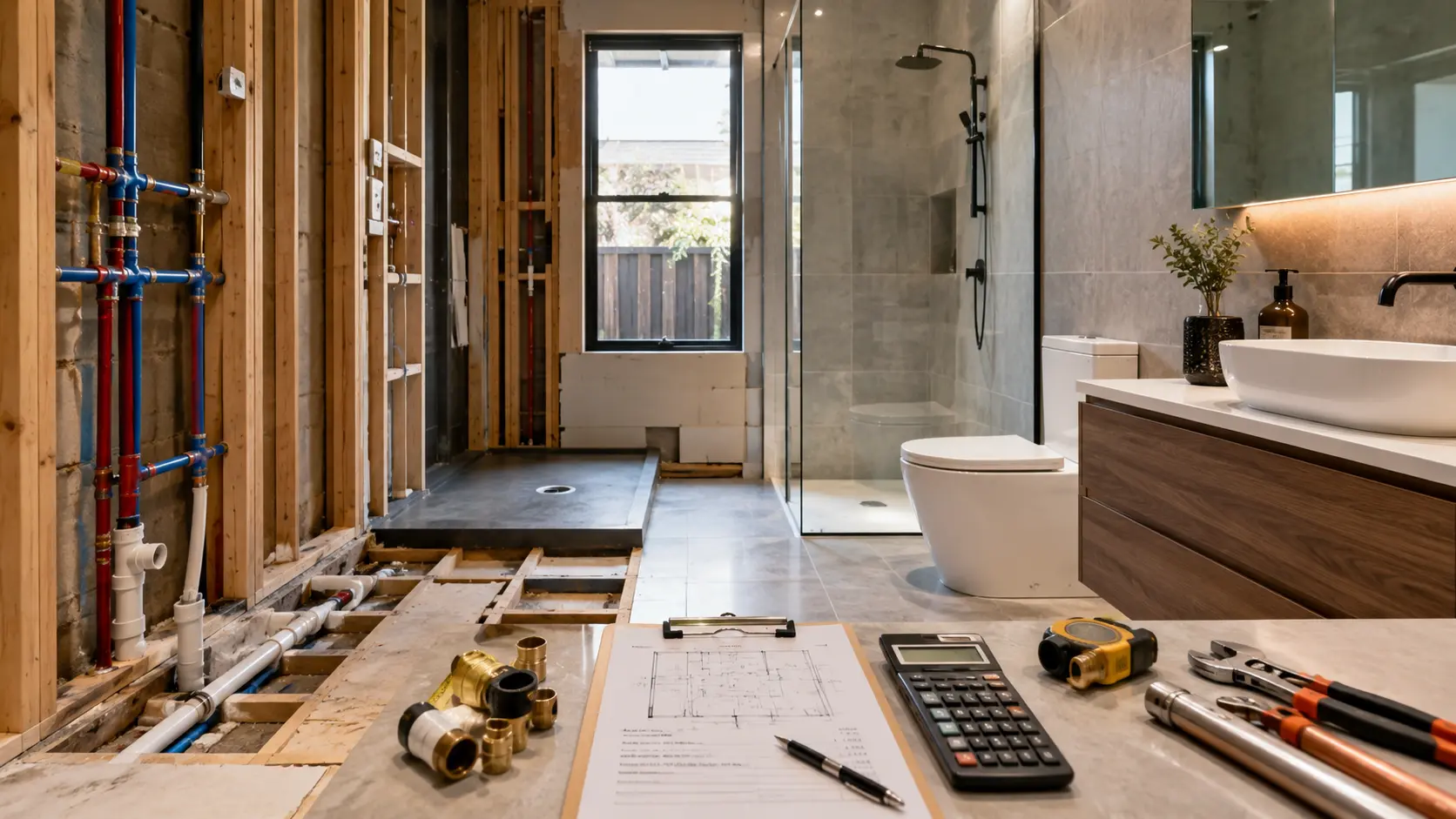
Planning a bathroom renovation in Melbourne often starts with the visible things. Homeowners think about tiles, tapware, a vanity, a shower screen, and maybe a freestanding bath.
But once the renovation begins, the plumbing behind the walls can become one of the biggest cost factors. This is where many bathroom budgets start to change.
The plumbing cost for bathroom renovation Melbourne homeowners should expect depends on more than the number of taps or toilets. It depends on the layout, pipe condition, drainage, waterproofing, access, fixture choices, and whether hidden problems appear after demolition.
So, how much should you budget? The honest answer is that bathroom plumbing costs vary widely. A simple update using the same layout will usually cost less than a full layout change where the toilet, shower, vanity, or bath moves to a new position.
Fast Facts
- Layout changes drive cost: Moving a toilet, shower, vanity, or bath usually increases plumbing work and labour.
- Rough-in comes first: Pipes and drain positions must be set before waterproofing, tiling, and final fixture installation.
- Hidden issues can appear: Old pipes, leaking showers, damaged waste lines, or rotten subfloors may only be found after demolition.
- Fixture choices matter: Choosing your toilet, vanity, bath, tapware, and shower fittings early helps avoid costly changes later.
- Cheap quotes need checking: Always confirm what is included, excluded, and whether rough-in, fit-off, drainage, and compliance needs are covered.
What Bathroom Plumbing Costs Usually Include
Bathroom plumbing is not just the final step where a plumber connects taps and a toilet. It usually starts much earlier in the renovation. Most bathroom plumbing work includes two main stages: rough-in and fit-off.
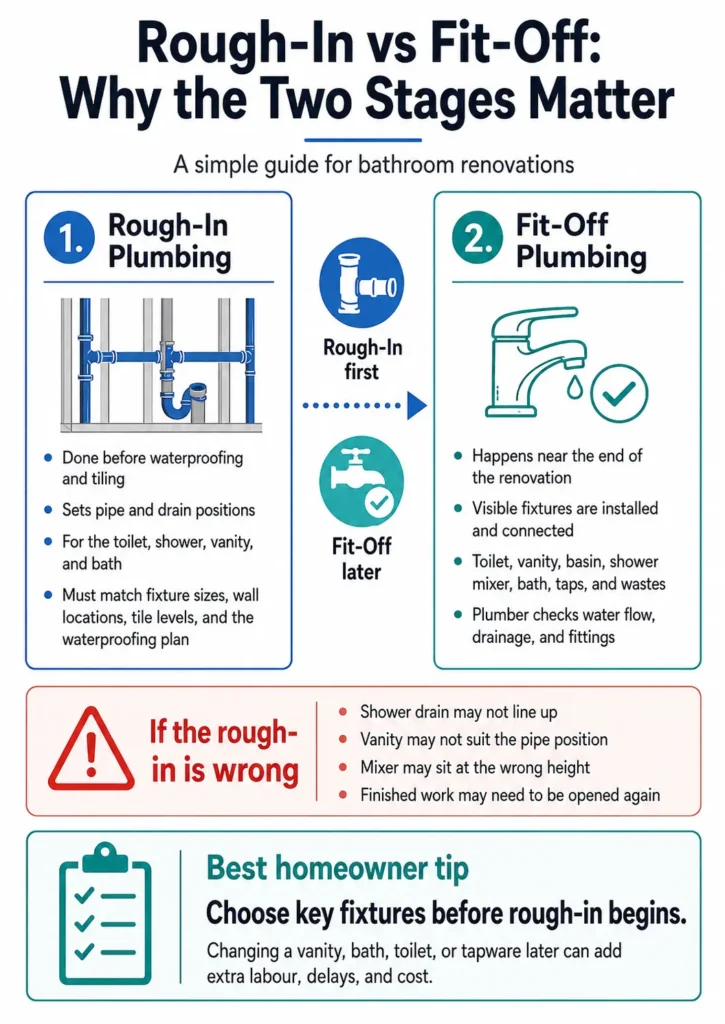
Rough-in plumbing happens before walls are closed, waterproofing starts, and tiles go down. At this stage, the plumber prepares water lines, waste pipes, drainage points, and fixture positions.
Fit-off plumbing happens near the end of the renovation. This is when the toilet, vanity, basin, shower mixer, bath, taps, and wastes are installed and connected.
A bathroom plumbing quote may also include testing, basic drainage adjustments, and connection to existing services. However, not every quote includes the same items.
Some quotes may exclude fixture supply, major pipe replacement, slab cutting, hidden water damage repairs, compliance documentation, or unexpected drainage changes. That is why homeowners should always ask what is included and what is not included before approving the work.
Rough-In vs Fit-Off: Why the Two Stages Matter
Rough-in plumbing is one of the most important parts of a bathroom renovation. Even though homeowners may not see much progress at this stage, this is where the bathroom layout becomes real.
The plumber must place pipes and drains in the correct positions for the toilet, shower, vanity, and bath. These positions need to suit the final fixture sizes, wall locations, tile levels, and waterproofing plan.
If the rough-in is wrong, it can create problems later. A shower drain may not line up properly. A vanity may not suit the pipe position. A mixer may sit at the wrong height. In some cases, finished work may need to be opened again.
Fit-off plumbing is more visible. This is when the finished bathroom starts to look complete. The plumber connects the visible fixtures and checks that water flows, drains work, and fittings operate correctly.
This is why homeowners should choose key fixtures before rough-in begins. Changing a vanity, bath, toilet, or tapware after rough-in can add extra labour, delays, and cost.
The Biggest Budget Question: Are You Keeping the Same Layout?
The most important plumbing cost question is simple: are you keeping the same layout?
If the toilet, shower, vanity, and bath stay close to their current positions, plumbing work is usually more straightforward. The plumber may still need to update old connections or replace some pipework, but the main drainage points may stay similar.
If you change the layout, the cost can rise quickly. Moving fixtures often means rerouting pipes, changing waste lines, cutting into floors or walls, and adjusting drainage.
Moving a toilet is often one of the most expensive layout changes. A toilet needs a properly positioned waste pipe with the right fall and connection. Moving it across the room is not the same as changing a tap.
Moving a shower can also affect cost. The shower drain must work with the floor fall, waterproofing, screed, and tile layout. If the drain sits in the wrong place, the bathroom can face drainage or waterproofing problems later.
Other upgrades can also add complexity. A double vanity may need extra pipework. A freestanding bath may need different floor or wall connections. A wall-hung toilet or vanity may need concealed plumbing and stronger wall support.
The easiest way to control the plumbing budget is to plan the layout early and avoid moving major fixtures unless the design benefit is worth the extra cost.
Hidden Plumbing Problems Found After Demolition
Many Melbourne bathroom renovations reveal problems only after the old tiles, walls, bath, or flooring come out.
Older homes, units, townhouses, and period properties can hide plumbing issues behind finished surfaces. Even a bathroom that looks acceptable may have water damage, old pipes, or poor previous renovation work underneath.
Common hidden issues include corroded pipes, leaking shower areas, rotten subfloors, damaged waste pipes, blocked drains, poor drainage fall, and non-compliant plumbing. Sometimes, the waterproofing around pipe penetrations has failed. In other cases, past work may have been done cheaply or incorrectly.
These issues can increase the final cost because they must be fixed before the new bathroom is completed. Covering them up would only create bigger problems later.
This is why a realistic bathroom budget should include a contingency. Homeowners should not assume that the first quote will cover every hidden issue. A good renovation team should explain what can be confirmed before demolition and what may only become clear once the old bathroom is opened.
Compliance, Waterproofing, and Why Cheap Plumbing Can Cost More Later
Bathroom plumbing must work with waterproofing, tiling, drainage, and ventilation. These parts are connected, so they should not be planned separately.
Poor pipe placement can affect waterproofing. A badly positioned shower drain can affect the floor fall. Weak coordination between trades can lead to leaks, pooling water, cracked tiles, or costly repairs.
In Victoria, homeowners should also think about licensing and compliance. Bathroom plumbing should be handled by the right qualified trade professional. This matters for safety, insurance confidence, resale value, and long-term protection.
Some renovation scopes may also need extra checks or approvals, especially if walls, structure, drainage, apartments, or owners corporation rules are involved. Not every bathroom update needs the same approval process, but homeowners should ask before work begins.
A cheap quote may look attractive at first. But if it excludes rough-in details, fit-off work, drainage changes, compliance requirements, or hidden damage allowances, it may not be the cheapest option in the end.
How to Budget Smartly Before You Start
The best way to manage bathroom plumbing costs is to make key decisions before work begins.
Start with the layout. If your budget is tight, keep the toilet, shower, vanity, and bath close to existing plumbing points where possible.
Next, choose fixtures early. Select the vanity, toilet, bath, tapware, shower mixer, and drain style before rough-in starts. This helps the plumber place pipes correctly the first time.
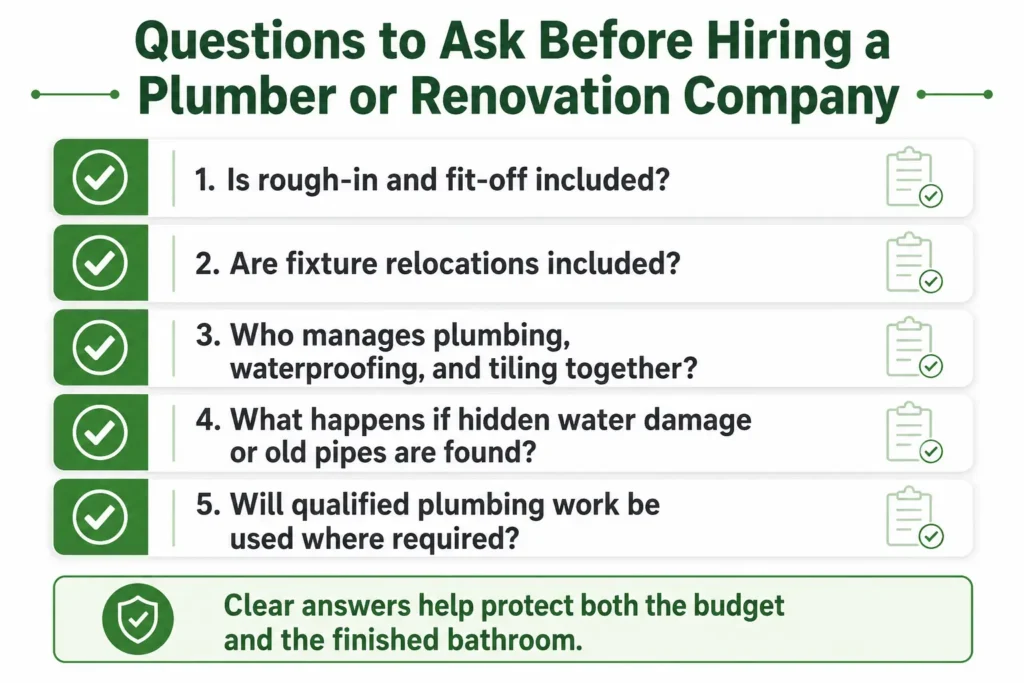
Then, ask for a detailed quote. It should explain inclusions, exclusions, stages, fixture relocation costs, and what may count as a variation.
You should also allow a contingency for hidden issues, especially in older Melbourne homes. A small buffer can reduce stress if old pipes, leaks, damaged flooring, or poor previous work appear during demolition.
Most importantly, avoid choosing a renovation team based only on the lowest number. A bathroom is a wet area. Plumbing, drainage, waterproofing, and tiling must work together.
A well-planned bathroom may not always be the cheapest at the start, but it can save money, stress, and repairs later.
Also Read
If you are comparing plumbing costs with fixture updates, this guide on how much it costs to renovate a bathtub in Melbourne explains another important bathroom renovation expense.
Final Takeaway
Bathroom plumbing costs in Melbourne depend less on the visible fixtures and more on what happens behind the walls and under the floor.
If you keep the same layout, choose fixtures early, use qualified trades, and plan plumbing with waterproofing and tiling, your budget is easier to control.
If you move major fixtures or uncover hidden damage, you should expect higher costs.
The smartest approach is not to guess the plumbing budget. Plan the bathroom carefully, ask detailed questions, and work with a renovation team that understands the full process from demolition to final fit-off.
FAQs
How much should I budget for bathroom plumbing in Melbourne?
The cost depends on your bathroom layout, pipe condition, fixture choices, drainage work, and whether hidden issues appear after demolition. A bathroom that keeps the toilet, shower, vanity, and bath in similar positions is usually easier to budget than one that moves major plumbing points.
Why does moving a toilet or shower increase plumbing costs?
Moving a toilet or shower often means changing waste pipes, drainage falls, floor levels, waterproofing details, and wall or floor access. This extra work can increase labour, materials, and renovation time, especially in older Melbourne homes, units, or bathrooms with slab flooring.
How can I reduce bathroom plumbing costs without cutting corners?
You can control costs by planning the layout early, keeping major fixtures close to existing plumbing points, choosing fixtures before rough-in, and asking for a detailed quote with inclusions and exclusions. It is also smart to allow a contingency for hidden pipe, drainage, or water damage issues.